
Welcome to GolfLic.com, Golf Lessons In A Can.
We took real bits of golf lesson and canned them in a golfer safe formula that is fun, safe, and effective to use.

GolfLic Golf Lessons In a Can
Tired of endless, pointless chatter from social golf influencers? Want to improve your golf game without confusing jargon and endless talk? Does watching more golf videos actually make your swing worse? GolfLic’s canned golf lessons are sure to quench your thirst for golf knowledge. Crack open a GolfLic, and improve your game with GolfLic, Golf Lessons in a Can.
Most Watched Golf Videos
The most-watched golf videos from the Jobe Leonard YouTube channel, ranked by views.





Birdie putt White 4 Dandridge Golf
Birdie Putt on White 4 at Dandridge: The Pre-Shot Routine That Holes More Putts
Standing over a birdie putt on the 4th at Dandridge’s White nine, the difference between a make and a miss usually is not the stroke — it is everything that happened in the 20 seconds before it. This video is a perfect example of why a rock-solid pre-shot routine is the most underrated putting weapon in golf.
A great putting routine has three phases: read, rehearse, react. Read the putt from behind the ball and the low side to lock in line and pace. Rehearse with one or two practice strokes that match the exact length and tempo of the real putt. Then react — step in, aim, look, and go, with zero hesitation or second-guessing.
Keep It Short, Keep It Identical
The best routines are boring and brief — 15 to 20 seconds, the same every time. Long routines invite doubt; inconsistent routines invite tension. Time yourself on the practice green until your routine feels automatic, then protect it on the course like a ritual.
One powerful addition: the “look and go” trigger. After your practice strokes, take one final look at the hole, let your eyes come back to the ball, and stroke within two seconds. That commitment window shuts out the doubts that creep in when you linger over the ball.
You cannot control whether the ball drops, but you can control the process that gives it the best chance. Build the routine, trust the routine, and the birdies will come.
⛳️ Want more raw, unfiltered golf? Browse the full Shankers Blog — every shot, every round, no fluff.

Birdie putt White 3 Dandridge Golf
Birdie Putt on White 3: Taking On Dandridge’s White Course
Every course has its own personality, and the White Course at Dandridge Golf and Country Club has a quiet way of testing you early — the video above shows a birdie putt on White 3, just three holes into the round. New nine, new greens, new chances.
Switching nines (or playing a less-familiar course) means recalibrating everything: green speed, break, even how the ball comes off the putter. A birdie look on the third hole is a gift — it means your approach play is dialed in before you’ve fully figured out the greens. The trick is converting while you’re still learning.
Adjusting to New Greens
Early on an unfamiliar nine, play for speed first, line second. Your reads will get sharper as the round goes on, but speed is something you can control from putt number one. Lag it close, tap it in, and bank the information for later.
Watch what the ball does on these early putts like a scientist. Does it break more or less than it looks? Does it hold its line or wobble? By White 3, you should already have two holes of data — use it. The golfers who adjust fastest are the golfers who score fastest.
The video shows a birdie chance on a course that’s still revealing itself. That’s golf: solve the puzzle while you’re playing it, and take the birdies when they come.
⛳️ Want more raw, unfiltered golf? Browse the full Shankers Blog — every shot, every round, no fluff.

Dandridge Golf Red Blue course birdie
Dandridge Golf: Chasing Birdies Across the Red and Blue Nines
Tucked into the foothills of East Tennessee, Dandridge Golf and Country Club serves up exactly the kind of golf that makes you want to keep score — rolling terrain, mountain views in every direction, and a Red and Blue nine that each ask different questions. The video above is a birdie from a round here, and it captures the course’s personality: scoreable if you play smart, punishing if you get greedy.
Mountain golf changes the geometry of birdie chances. Elevation shifts mean your 150-yard club might fly 165 downhill or 140 uphill, and the only way to know is to trust the number, not your eyes. The golfers who pile up birdies at Dandridge share one habit: they laser everything, factor the slope, and commit. Guesswork is where birdie holes become bogey holes.
Where the Birdies Hide
The scoring holes at Dandridge tend to be the ones that look intimidating off the tee but open up near the green — the risk is visual, not real. That is classic mountain-course design: the trouble frames the hole without actually guarding the scoring zones. Play to the wide side off the tee, and the approach is often simpler than it looked from 400 yards away.
The defense, meanwhile, is around the greens. Elevated greens with false fronts and collection areas mean your wedge distance control has to be sharp — long is frequently dead, and short spins back into trouble. The birdie formula here is unglamorous: fairway, right tier of the green, two putts or fewer. Do that patiently and the red numbers come.
Dandridge rewards the thinking golfer. Bring your rangefinder, respect the elevation, and let the birdies find you.
⛳️ Want more raw, unfiltered golf? Browse the full Shankers Blog — every shot, every round, no fluff.

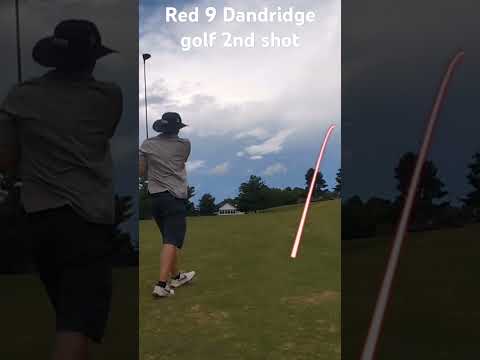
Red course Dandridge golf
Course Guide: The Red Course at Dandridge
Dandridge Golf’s Red Course is the nine you play when you want a fresh challenge without leaving your home track. This video gives a taste of the Red nine — its tee shots, its greens, its character. Whether it is your first loop or your fiftieth, every nine has a personality, and learning it is the fastest way to lower scores.
Learning a New Nine
The first time around any course, play it like a scouting mission. Hit the safe club off unfamiliar tees, aim at the middle of every green, and pay attention: where do the fairways tilt, which greens are elevated, where does trouble lurk? Take mental notes (or actual ones on your scorecard) about which holes suit a draw and which punish a miss. By the back nine of your first round, you will already be playing it smarter.
Score on the Red Course
Shorter nines like the Red are won with wedges and the putter, not the driver. Keep the ball in play off the tee — even if it means clubbing down — and attack with your scoring clubs. The holes that look easy on the card are where rounds are actually decided: a routine par 4 becomes a birdie hole when your wedge game is sharp, and a double when you get greedy.
Play the Red Course with patience the first time and aggression the second. Learn its lines, trust your wedges, and it will quickly become the nine where your low rounds happen.
⛳️ Want more raw, unfiltered golf? Browse the full Shankers Blog — every shot, every round, no fluff.

Golf 6 iron, Driver, 56 degree wedge
6 Iron, Driver, 56 Degree Wedge: The Three Clubs That Matter Most
If your bag caught fire and you could save three clubs, which would you grab? The video above spotlights a perfect trio: driver, 6 iron, and 56-degree wedge. There’s real wisdom in that selection — these three clubs cover nearly every shot golf asks of you.
What Each Club Teaches You
The driver is your distance and confidence club. It sets the tone off the tee and, when it’s working, makes every hole shorter. Groove a reliable, repeatable tee shot and the rest of the game gets easier.
The 6 iron is the honest club — long enough to reach par 3s and second shots, short enough to control. If you can flight a 6 iron with a consistent draw or fade, you can play golf anywhere.
The 56-degree wedge is your scoring club. Chips, pitches, bunker shots, and those in-between distances all live here. Short game is where strokes are saved, and the 56 is the tool that saves them.
The Gapping Lesson
Notice the spread: driver for 250+, 6 iron for the 170s, wedge for 100 and in. That’s a complete scoring system with three clubs. Next time you practice, hit all three in rotation — it trains your brain to switch gears between power, control, and touch, which is exactly what a real round demands.
And yes, you’d obviously save the putter too — it just goes without saying. But the lesson stands: build your game around a reliable tee shot, an honest mid-iron, and a scoring wedge, and you have the skeleton of a complete golfer. Everything else in the bag is specialization; these three are the foundation.
⛳️ Want more raw, unfiltered golf? Browse the full Shankers Blog — every shot, every round, no fluff.

Blue Course Dandridge Golf
Blue Course at Dandridge Golf Course: A Player’s Guide
Dandridge Golf Course sits in the rolling hills of East Tennessee, and its Blue nine — featured throughout the videos above — is the kind of layout that rewards smart, steady golf. If you are planning a trip, here is what to expect and how to score.
The Blue course is a classic parkland test: tree-lined corridors, gently undulating greens, and enough length to make you think without beating you up. It is the rare course that is welcoming for beginners yet still asks questions of single-digit players — mostly around the greens, where subtle Tennessee grain and slope turn routine two-putts into adventures.
How to Play the Blue Nine Well
Respect the par 3s. The one-shotters on the Blue nine tend to play to well-guarded greens, and short-siding yourself is the fastest route to bogey. Take an extra half club, aim for the fat of the green, and let your putter do the scoring.
Position matters more than power off the tee. The fairways have enough shape that angles into the greens matter. A 240-yard drive in the short grass beats a 280-yard drive behind a tree every time — plot your way around rather than overpowering it.
Bring your short game. As the birdie-putt videos from Blue 1, Blue 3, and Blue 6 show, this nine gives up chances to anyone who chips and putts decently. Spend your warm-up on the practice green, not the range.
Dandridge’s Blue course is pure, honest golf — no tricks, just a fair test. Play smart, roll it well, and you will walk off wanting to go straight back to the first tee.
⛳️ Want more raw, unfiltered golf? Browse the full Shankers Blog — every shot, every round, no fluff.

Birdie putt white 5 Dandridge Golf
Birdie Putt on White 5 at Dandridge: How to Read Greens Like a Detective
The birdie putt in this video — on the 5th at Dandridge’s White nine — looks straightforward until you study the green. Then the subtle tiers, the grain, and the hidden break reveal themselves. Great green reading is detective work, and here is how to crack the case on putts like this one.
Start with the big picture: greens drain toward water and slope away from high ground, so find the lowest point around the green before you even mark your ball. Then read from the low side of the putt — crouching behind the hole looking back at your ball shows you the slope your putt will actually ride.
The Details Most Golfers Miss
Check the grain by looking at the sheen of the green: shiny grass grows toward you (faster putts), dull grass grows away (slower). In the morning, dew lines and your footprints tell the same story. Grain will not turn a straight putt into a breaker, but on a 15-footer it can nudge the ball a crucial few inches.
Also, trust the “eyes plus feet” combo: use your eyes first, then walk the putt and feel the slope under your feet. Your feet are surprisingly honest instruments — if the ground feels like it tilts left, it does.
Read it like a detective, commit like a closer. The more clues you gather, the more birdie putts start falling.
⛳️ Want more raw, unfiltered golf? Browse the full Shankers Blog — every shot, every round, no fluff.

Dandridge Golf Course birdie putt
The Birdie Putt Practice Routine That Actually Works
Want more birdies at Dandridge — or anywhere? It starts long before the round, on the practice green, with the video above as your inspiration. Most golfers practice putts they’ll never face in a round: endless three-footers, no pressure, no consequence. Then they wonder why the birdie putts don’t fall on the course.
The fix is simple: practice like you play. Real birdie putts are 10 to 25 feet, they break, and they matter. Your practice should look like that — putts with a consequence, putts from real distances, putts that make your hands a little shaky.
The 9-Ball Birdie Drill
Drop nine balls in a circle, 10 to 20 feet from the hole, at different angles. Your goal: two-putt or better on all nine, and every first putt must finish inside three feet. Miss the three-foot circle? Start over. It simulates the exact pressure of a real birdie putt — make the lag, or else.
Track your makes over time. When you can regularly get 7 of 9 inside the circle, your on-course birdie conversion will follow. The drill works because it trains the two skills that matter: distance control on the first putt and confidence on the second.
Watch the video, then go earn your birdies on the practice green. The putts you make in practice are the putts you believe you can make on the course.
⛳️ Want more raw, unfiltered golf? Browse the full Shankers Blog — every shot, every round, no fluff.

Par 5, 2nd shot, 168 yards, Blue
The Par-5 Second Shot: Solving the 168-Yard Question
One hundred sixty-eight yards, second shot, par 5. You are standing in the fairway on Blue at Dandridge with a decision that will define the hole. The video above captures this exact moment — and it is the most interesting decision in golf. Go for the green and eagle is in play; lay up and you trade excitement for control. There is no universally right answer, but there is a right way to think about it.
Start with honest math. Can you actually reach? That means carrying the trouble — not the hero number from your best-ever 5-wood, but your average strike, into today’s wind, off today’s lie. If the answer needs everything to go right, it is not a golf shot; it is a lottery ticket. The players who score on par 5s go for it when the percentages favor them and lay up without ego when they do not.
Laying Up With a Purpose
Here is what separates smart layups from surrender: a layup is not just “hitting it somewhere up there.” It is advancing the ball to your favorite wedge number. If your money yardage is 85 yards, then the second shot’s job is to leave 85 — not 40, not 130. Pick the club that puts you on that number from where you stand, favor the side of the fairway that opens up the pin, and treat the layup with the same focus you would give the hero shot.
And if you do go for it from 168, commit like you mean it. The worst outcome is the in-between swing — the half-hearted hybrid that finds the one bunker you were trying to avoid. Pick the shot, visualize the flight, and swing with conviction.
Par 5s are where rounds are built. Make the decision like a strategist, execute like you have already decided — because you have.
⛳️ Want more raw, unfiltered golf? Browse the full Shankers Blog — every shot, every round, no fluff.
Ready to finally understand golf improvement without the headache? GolfLic.com is your dedicated source for free and easy golf lessons designed to deliver real results, fast. Forget the confusing theories and endless explanations – just clear, actionable advice and videos to get you swinging better and enjoying the game more. Explore our free lessons now and unlock your golfing potential at GolfLic.com!