
Welcome to GolfLic.com, Golf Lessons In A Can.
We took real bits of golf lesson and canned them in a golfer safe formula that is fun, safe, and effective to use.

GolfLic Golf Lessons In a Can
Tired of endless, pointless chatter from social golf influencers? Want to improve your golf game without confusing jargon and endless talk? Does watching more golf videos actually make your swing worse? GolfLic’s canned golf lessons are sure to quench your thirst for golf knowledge. Crack open a GolfLic, and improve your game with GolfLic, Golf Lessons in a Can.
Most Watched Golf Videos
The most-watched golf videos from the Jobe Leonard YouTube channel, ranked by views.





Druid Hills #14 Par 5 Signature hole
Druid Hills #14: How to Play a Par 5 Signature Hole
Every course has one — the hole on the scorecard photo, the one the members talk about. At Druid Hills, it is the par-5 14th: the signature hole. Signature holes earn the title by being beautiful and brutal in equal measure, and the 14th demands a real game plan, not just hope and a big drive.
Respect the Design
Signature par 5s are designed to tempt you. There is always a heroic line — carry the trouble, cut the corner, reach in two — and there is always a smart line that the architect left for thinking golfers. On your first play, take the smart line: find the wide part of the fairway off the tee, then decide on the second shot with real information instead of ego. You can always get aggressive on the replay.
The Second-Shot Decision
This is where par 5s are won. Ask two questions: what is my realistic chance of reaching, and what is the worst miss? If you can reach with a clean strike and the miss is a greenside bunker, go for it. If the miss is water, deep rough, or out of bounds, lay up to your favorite wedge number and trust the short game. A stress-free birdie putt from a layup beats a scrambling par from the hazard every time.
Signature holes are meant to be savored, not survived. Play #14 with a plan, commit to every shot, and whether you birdie it or not, you will have a story — which is the whole point of a signature hole.
⛳️ Want more raw, unfiltered golf? Browse the full Shankers Blog — every shot, every round, no fluff.

This was the 3rd 100 ball bucket
The 3rd 100-Ball Bucket: What Serious Practice Really Looks Like
Three hundred balls. Let that sink in — the video above documents the third hundred-ball bucket of the session. That’s not a range trip; that’s a training camp. Here’s what you can learn from that kind of dedication.
Volume With Purpose
Hitting 300 balls only helps if the last hundred are as intentional as the first. The pros separate “block practice” (grooving one shot) from “random practice” (switching targets and clubs like a real round). By bucket three, the smart move is random practice: pick a new target every shot, go through your routine, and simulate on-course pressure.
Watch for fatigue, too. When your grip pressure creeps up and your tempo quickens, you’re grooving bad habits. The best grinders take breaks, hydrate, and reset — quality reps beat tired reps.
What 300 Balls Builds
Sessions like this build two things: a repeatable motion and mental toughness. There’s a confidence that comes from knowing you’ve outworked the field — standing on the first tee knowing you’ve already hit today’s drive two hundred times.
You don’t need 300 balls to improve. But borrow the mindset: every ball with a purpose, every bucket with a plan.
Marathon sessions demand maintenance: bring two gloves and rotate them, keep water in the bag, and shake out your hands every twenty balls. Blisters and fatigue are the silent killers of long practice days — the golfers who grind smart protect the hands that do the grinding.
⛳️ Want more raw, unfiltered golf? Browse the full Shankers Blog — every shot, every round, no fluff.

Golf Swing at Ruggles Ferry
Golf Swing at Ruggles Ferry: Playing a New Track with Confidence
There is something special about swinging it at a course you do not know — like Ruggles Ferry Golf Course in the video above, a scenic East Tennessee layout along the Holston River. New courses strip away your habits and force you to play golf in its purest form: see the shot, trust the swing, accept the result.
Ruggles Ferry is known for its riverside setting and elevation changes, the kind of course where every hole looks a little different from anything you have played before. That unfamiliarity is a gift if you let it be — no scar tissue from past blow-ups, no “I always miss left here” baggage.
Swing Thoughts for Unfamiliar Courses
Keep the swing simple and the strategy simpler. On a first visit, your only swing thought should be tempo — smooth back, smooth through. Save the swing experiments for the range; new courses reward rhythm, not mechanics.
Play conservatively off the tee until you learn the layout. A hybrid or fairway wood into position beats a driver into mystery, especially on holes with blind landing areas or water you cannot see from the tee box. You can always get aggressive on the second loop.
Take in the scenery between shots. Ruggles Ferry’s river views are genuinely spectacular, and golfers who stay relaxed and enjoy the walk almost always swing better than golfers white-knuckling a scorecard on a strange course.
New course, clean slate, smooth tempo — that is the formula. The swing in this video has the right idea.
⛳️ Want more raw, unfiltered golf? Browse the full Shankers Blog — every shot, every round, no fluff.

Dandridge Golf on Red and Blue
Dandridge Golf on the Red and Blue: Course Highlights and What to Expect
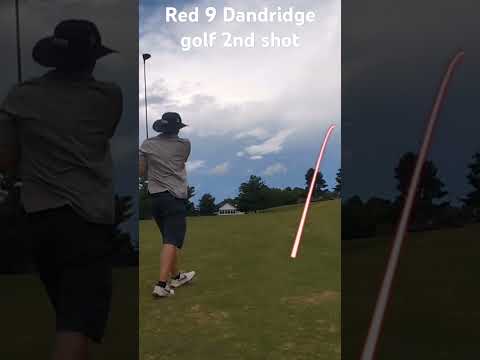
If you are planning a trip to Dandridge Golf Course in East Tennessee, the Red and Blue nines deliver a fantastic one-two punch. This video tours the highlights of both nines — and after watching, you will know exactly what to expect when you tee it up there yourself.
The Red nine is the shot-maker’s test: tighter corridors, thoughtful green complexes, and par 4s that reward position over power. The Blue nine opens things up a bit more, with generous landing areas and par 5s that give longer hitters a chance to shine. Together they make a balanced, thoroughly enjoyable 18.
What Makes Dandridge Special
Set near Douglas Lake with the Smoky Mountains in view, the setting alone is worth the trip — but it is the conditioning and variety that keep golfers coming back. Each nine has its own personality, so a Red-Blue round never feels repetitive, and the walkable routing makes it a pleasure on foot.
Before you go, a few tips: book the Red-Blue combo for the full experience, bring an extra club for the elevation changes, and do not skip the practice green — the greens are true but subtle, and a few minutes of prep pays off fast.
Dandridge’s Red and Blue nines are East Tennessee golf at its best: scenic, strategic, and fun. Put it on your list.
⛳️ Want more raw, unfiltered golf? Browse the full Shankers Blog — every shot, every round, no fluff.

Sevierville Golf Course Highlands
Sevierville Golf Club: A Highlands Round Worth the Drive
Tucked into the foothills of the Smokies, Sevierville Golf Club’s Highlands course is one of East Tennessee’s best-kept secrets — and the video above shows why. Rolling terrain, mountain views, and a layout that asks real questions without beating you up. This is the kind of course that reminds you why you fell in love with golf.
The Highlands nine plays through elevation changes that make club selection genuinely interesting. Uphill approaches play a full club long; downhill tee shots chase out farther than you expect. Bring your eyes and your imagination — this isn’t target golf, it’s thinking golf.
Playing the Highlands Well
First, respect the elevation. When in doubt between clubs on an uphill shot, take the longer one — coming up short in the Highlands usually means a nasty uphill chip. On downhill shots, club down and let gravity do the work.
Second, play the safe side of every green. The Highlands’ putting surfaces have subtle slopes that punish the wrong miss, so aim for the fat part and take your two-putt par with pride. Boring golf scores well here.
Third, soak it in. Courses with views like this are why we play. Take the picture on the high tee box, breathe the mountain air, and remember that the scorecard is only half the reason you’re out here. Watch the video — then go see it for yourself.
⛳️ Want more raw, unfiltered golf? Browse the full Shankers Blog — every shot, every round, no fluff.

Core Golf Dandridge Drive Golf ball over Mountain
Over the Mountain: Committing to the Carry Off the Tee
There is a tee shot at Dandridge that asks a simple, terrifying question: can you carry it over the mountain? The video above shows the answer — a drive launched on a bold line, over the trouble, into scoring position. It is the kind of tee shot that defines a round, and the lesson is not about power. It is about commitment.
Carry shots are lost before the club moves. The golfer picks a line, then aims a little safer at the last second, then makes a steering swing at a target they never actually chose. The result is the worst of both worlds: a tentative swing on an aggressive line. If you are going to take on a carry, the decision must be final before you step into the ball. Doubt and distance do not mix.
How to Pick Your Line and Own It
Do the homework first. Laser the carry distance to clear the trouble — not to the fairway beyond, but to the near edge of safety. Then add your real-world buffer: your average drive carry, not your best, in today’s wind. If the number works with room to spare, the shot is on. If it needs your career drive, pick another line. Courage without math is just hope.
Then visualize the whole flight, not just the launch. See the ball climbing, cresting the ridge, and falling into the fairway — a complete movie, not a snapshot. Pick an intermediate target a few feet in front of the ball on your start line, and swing at that. The mountain takes care of itself; your only job is the start line and a full, free swing.
The bold line at Dandridge rewards the committed. Choose it or do not — but once chosen, swing like you mean it.
⛳️ Want more raw, unfiltered golf? Browse the full Shankers Blog — every shot, every round, no fluff.

Las Vegas Golf Trip
Las Vegas Golf Trip: Desert Golf Done Right
Vegas is not just casinos and shows — it is one of the great golf trip destinations in America, with desert tracks that look like another planet and conditioning that embarrasses most hometown courses. This video captures the trip energy: sun, red rock, and golf that feels like an event. If you are planning your own Vegas golf getaway, here is how to do it right.
Picking Your Courses
Vegas has tiers, and they are all worth experiencing. The big-name resort courses deliver the bucket-list visuals — dramatic elevation, island greens, impeccable service. But some of the best value in desert golf sits just off the Strip: well-conditioned daily-fee tracks at half the price. Mix one splurge round with two value rounds and you get the full experience without the full damage to your wallet. Book tee times early — prime morning slots in season go fast.
Surviving Desert Golf
- Hydrate like it is your job. Desert air steals moisture silently; drink water every hole, not when you are thirsty.
- Take extra club. Elevation changes and thin air do strange things to distance — trust the number, not your ego.
- Play early. Summer rounds after 10 a.m. are a survival exercise; dawn tee times are pure joy.
- Respect the desert. It is not rough, it is a lost ball. Aim away from the native areas.
A Vegas golf trip is the perfect blend of great golf and great stories. Plan the courses, respect the heat, and bring home a tan and a lower handicap.
⛳️ Want more raw, unfiltered golf? Browse the full Shankers Blog — every shot, every round, no fluff.

100 Golf Balls Time Lapse
100 Golf Balls Time Lapse: How to Structure the Perfect Range Session
A hundred balls disappear fast when you’re just banging away — the time lapse in the video above proves it. But a hundred balls with a plan? That’s a genuine practice session. Here’s how to spend every ball wisely.
The 100-Ball Blueprint
- Balls 1–15: Warm up. Start with wedges, easy tempo, waking up the body. No technical thoughts yet.
- Balls 16–50: Block practice. Pick one skill — say, 7-iron dispersion — and groove it with a single target.
- Balls 51–80: Random practice. Switch clubs and targets every shot. This is where real golf simulation happens.
- Balls 81–100: Pressure test. Give yourself games: ten balls, must hit seven fairways, or the “round” doesn’t count.
Why Structure Beats Volume
Unstructured range sessions feel productive but transfer little to the course. Your brain learns through challenge and variation, not repetition alone. The time lapse looks cool — but the golfer who plans those 100 balls is the one who shoots lower next weekend.
Next range trip, bring a plan, not just a bucket. Your scorecard will notice the difference.
Level up the blueprint by tracking one stat per session — fairways hit, greens hit, or up-and-down percentage. Write it on your phone after the bucket. Over a month, those numbers tell you exactly what’s improving and what’s not, turning random range trips into a real training program.
⛳️ Want more raw, unfiltered golf? Browse the full Shankers Blog — every shot, every round, no fluff.

Birdie putt white 7 Dandridge golf
Birdie Putt on White 7: Performing When the Putt Matters
The putt in the video above on White 7 at Dandridge is not technically difficult — but it matters, and that changes everything. A birdie putt with your group watching, maybe a little match on the line, turns a routine six-footer into a genuine pressure test.
Pressure does not change your stroke; it changes your attention. Under stress, golfers rush routines, grip tighter, and start steering the putter instead of stroking it. The fix is not a better stroke — it is a better process for the moments that count.
A Pressure-Proof Putting Routine
Breathe before you read. One slow breath — in through the nose, out through the mouth — drops your heart rate and tells your nervous system there is no emergency. Tour players do some version of this on every big putt; it is the least fancy and most effective tool in the mental game.
Shrink your focus to something tiny. Do not think “I need this birdie” — think “smooth back, smooth through” or “roll it over that discolored blade of grass.” Small, controllable thoughts crowd out big, scary ones.
Then commit fully and accept the result before you hit it. The paradox of pressure putting is that the golfers who care least about the outcome in the moment make the most putts. Decide on the line, trust it completely, and let the stroke you already own do the work.
White 7 does not know it is a pressure putt. Treat it like any other roll, and the birdies will come.
⛳️ Want more raw, unfiltered golf? Browse the full Shankers Blog — every shot, every round, no fluff.
Ready to finally understand golf improvement without the headache? GolfLic.com is your dedicated source for free and easy golf lessons designed to deliver real results, fast. Forget the confusing theories and endless explanations – just clear, actionable advice and videos to get you swinging better and enjoying the game more. Explore our free lessons now and unlock your golfing potential at GolfLic.com!