
Welcome to GolfLic.com, Golf Lessons In A Can.
We took real bits of golf lesson and canned them in a golfer safe formula that is fun, safe, and effective to use.

GolfLic Golf Lessons In a Can
Tired of endless, pointless chatter from social golf influencers? Want to improve your golf game without confusing jargon and endless talk? Does watching more golf videos actually make your swing worse? GolfLic’s canned golf lessons are sure to quench your thirst for golf knowledge. Crack open a GolfLic, and improve your game with GolfLic, Golf Lessons in a Can.
Most Watched Golf Videos
The most-watched golf videos from the Jobe Leonard YouTube channel, ranked by views.


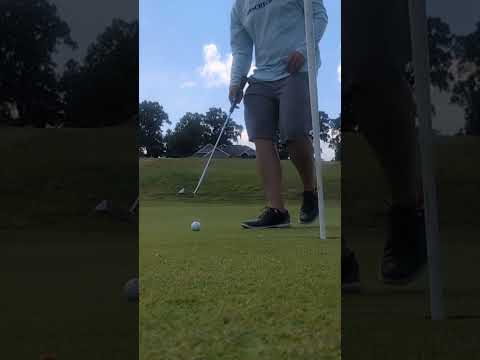



$500 golf simulator setup for small space. DIY Golf simulator in 90 seconds
$500 Golf Simulator Setup for a Small Space (DIY in 90 Seconds)
A full golf simulator used to mean a five-figure budget and a dedicated room. Not anymore. This video proves you can build a genuinely useful DIY setup for around $500 that fits in a garage corner or spare room — and shows the whole build in about ninety seconds. Here is how to spend that money wisely.
Where the $500 Goes
The non-negotiables: a hitting net (around $100–150 for a sturdy pop-up or framed net), a quality hitting mat (another $100–150 — do not cheap out here, your wrists will thank you), and a budget launch monitor. Entry-level radar units now track ball speed, launch, and carry for a couple hundred dollars, and they are the piece that turns mindless swinging into real practice with feedback.
That leaves room for the small stuff that matters: a strip of turf or hitting pad, foam practice balls for tight spaces, and a phone tripod so you can film your swing alongside the data.
Making a Small Space Work
- Measure twice. You need roughly 10 feet of ball flight to a net and enough ceiling height to swing a driver — 9 feet is the comfort zone.
- Protect everything. Shank screens or side netting are cheap insurance against drywall damage.
- Practice with purpose. Ten focused swings with launch data beat a hundred mindless ones. Work on one number — club path, face angle, or carry distance — per session.
A $500 simulator will not replicate Pebble Beach, but it will keep your swing grooved through winter and give you honest feedback every session. That is worth every penny.
⛳️ Want more raw, unfiltered golf? Browse the full Shankers Blog — every shot, every round, no fluff.
Install Optishot or Optishot2 .sac course file in 60 seconds detailed tutorial step by step guide
How to Install an OptiShot Course File in 60 Seconds
Downloaded a new .sac course file for OptiShot and not sure where it goes? The video above walks through the full installation step by step — and it really does take about a minute once you know where to look.
The 60-Second Process
Here’s the short version: download the .sac file, open your OptiShot courses folder (usually inside the OptiShot program directory on your PC), and drop the file in. Launch OptiShot, head to course select, and your new track should be sitting there ready to play. No installers, no registry edits, no headaches.
The most common trip-up is downloading the file but leaving it zipped. If your file ends in .zip, extract it first — OptiShot needs the actual .sac file, not the archive. Also double-check you’re dropping it into the courses folder, not the main program folder.
Troubleshooting: Course Not Showing Up
- Restart OptiShot after adding the file — the course list loads at startup.
- Check the file extension — it must be .sac, not .zip or .rar.
- Verify the folder — look for the directory containing your other course files and match it.
- Run as administrator if Windows is blocking the file copy.
Once it’s installed, you’ve got a brand-new course to conquer from your living room. Not a bad return on sixty seconds.
Pro tip: back up your .sac files to a USB drive or cloud folder. Custom course files can be hard to re-find if a link goes dead, and a fresh Windows install wipes your courses folder without mercy. Sixty seconds to install, ten seconds to back up — cheap insurance for your virtual golf library.
⛳️ Want more raw, unfiltered golf? Browse the full Shankers Blog — every shot, every round, no fluff.

How to Size Golf Clubs with AI & Simulator Data (Under 2 Minutes!)
How to Size Golf Clubs with AI: Start with Your Body, Not the Ball
There is more than one road to a good club fit. While launch monitors measure what the ball does, the approach in the video above starts earlier — with AI analyzing your body and swing to recommend the right specs before you ever hit a shot.
This matters because most golfers play clubs that simply do not fit their frame. Too-long irons force you to stand too upright, too-flat lie angles send shots right, and stiff shafts in slow swings cost you 15 yards you will never get back. Static measurements catch these problems in seconds.
What an AI Fitting Actually Measures
The big three are length, lie angle, and shaft flex. AI fitting apps typically use your height and wrist-to-floor measurement — taken from a quick photo or a tape measure — to estimate ideal club length. From there, lie angle follows: taller players or those with longer arms usually need more upright lies so the sole sits flush at impact.
Shaft flex comes from swing speed, which many apps estimate from a short video of your swing. Smooth, moderate tempos pair with regular flex; aggressive, fast transitions need stiff. Getting this wrong is the most common fitting error in golf, and it robs distance on every single shot.
Use the AI recommendation as your starting point, then verify with real balls — even a bucket at the range with some foot spray on the clubface will confirm whether the lie angle is right. Fit the golfer first, fine-tune with data second.
⛳️ Want more raw, unfiltered golf? Browse the full Shankers Blog — every shot, every round, no fluff.

Indoor Golf League
You are invited:
What: Free Winter Indoor Golf League
30-45 minute scored bi-weekly golf challenge or round on a golf simulator
Complete the scored challenge or round individually during the week or on a league night
Courses Available:
TPC Scottsdale
Bethpage Black
Torrey Pines North
Torrey Pines South
Royal Lytham
Plantation Kapalua Maui
Twisted Twig
Warwick Hills
Black Mountain Thailand
Palm Dessert Canyons
Palm Dessert Mountains
Driving Range
When: League night Thursdays 6pm, subject to change
Monday 9am – 5pm
Tuesday 10am – 2pm
Wendesday 9am – 5pm
Thursday 10am – 2pm (League night 6pm approximately 90 min 6pm-7:30pm)
Friday 9am – 5pm
The goal of the league is not to take away from regular golf. If the weather is good, we will play outdoors and scrap the league that day. As the weather gets colder, I will try to send out alerts for additional play time. For example in the 10 day forecast the high temperature is below 45 degrees or over 90% chance or precipitation is expected, it might be a good time to schedule a league day.
This is the club data I need (See image for example).
Enter your Golf Club data on this Google Form:
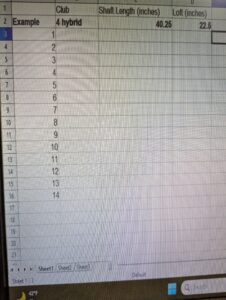
You can input it here as text or upload a spreadsheet, pdf, photo, or however you have the data:

Blue 6 Tee Shot with Lazers Dandridge Golf
Blue 6 at Dandridge: Dialing In the Tee Shot With a Laser
The 6th on the Blue Course at Dandridge Golf and Country Club is a tee shot that demands a number, not a guess — and the video above shows exactly how to get it. Pull the laser, shoot the flag or the trouble, and pick a club with confidence. That’s modern golf: yardages you trust, decisions you commit to.
Laser rangefinders changed amateur golf more than any club in the bag. Knowing it’s 172 to carry the bunker instead of “somewhere around 170” turns a hopeful swing into a committed one. And commitment is where good tee shots come from.
Using Your Laser Like a Pro
First, shoot more than the flag. Laser the front edge, the trouble behind, and the layup spot — the flag is only one number. On a hole like Blue 6, knowing where you can’t miss is more valuable than knowing the pin distance.
Second, add slope or do the math. If your laser has slope, use it — uphill and downhill change real distance dramatically. If it doesn’t, a quick rule: add or subtract a club for every 10 yards of elevation change.
Third, pick the shot shape before the club. The laser gives you the number; your eyes give you the hole. Match the club to the shot the hole is asking for, then swing with total commitment. Watch the video — that’s what a dialed-in tee shot looks like.
⛳️ Want more raw, unfiltered golf? Browse the full Shankers Blog — every shot, every round, no fluff.

Blue 4 Dandridge 3rd shot Par 5
The Par-5 Third Shot: Golf’s Most Underrated Scoring Opportunity
Everyone dreams about reaching par 5s in two. But the shot in the video above — the third shot on Blue 4 at Dandridge — is where par 5s are actually scored. After two solid shots, you are standing in the fairway with a wedge in your hand and a green in front of you. This is a birdie look earned the honest way, and how you play it decides whether the hole is a triumph or a shrug.
The mistake most golfers make here is mental: they treat the third shot as a layup hangover instead of an attack. You have done the hard work — now finish it. That means picking a precise target, not just “the green.” Middle of the green is fine when the pin is tucked; but when the pin is accessible, this is the moment to be brave. A full wedge from the fairway is the highest-percentage birdie chance in golf.
Picking Your Number on the Third
Distance control is everything. Laser the pin, then commit to a stock yardage — your comfortable full 56, your smooth pitching wedge, whatever the number demands. The cardinal sin of the par-5 third is the in-between swing: trying to take something off a longer club or muscle a shorter one. Play to your full number and let the ball do the work.
And manage the miss. On most par-5 greens, short-sided is the killer — the pitch back is downhill or over a bunker. When in doubt, take one more club and favor the fat side of the green. A 25-footer for birdie beats a chunked chip for par every time.
Par 5s are the holes where good rounds become great ones. Nail the third shot, and Blue 4 starts feeling like a birdie hole instead of a par hole.
⛳️ Want more raw, unfiltered golf? Browse the full Shankers Blog — every shot, every round, no fluff.

Tee shot Blue 6 Dandridge Golf
Tee Shot Breakdown: Blue 6 at Dandridge
Every hole has a tee shot that sets the tone, and Blue 6 at Dandridge is no exception. This video is all about that one swing off the tee — the setup, the strike, the ball flight. A good tee shot here turns the hole into a genuine scoring chance; a bad one turns it into a grind. Let us talk about how to get it right.
Pick Your Line Before You Swing
The mistake most golfers make on an unfamiliar tee box is aiming at trouble instead of away from it. Stand behind the ball, find the widest landing area, and pick an intermediate target — a divot, a discolored patch of grass — a few feet ahead on that line. Your brain aims the body at whatever your eyes lock onto, so lock onto something safe.
Then factor in your natural shot shape. If you play a fade, aim at the left edge of your landing zone and let it curve back to center. Fighting your pattern off the tee is a losing battle; using it is course management.
Commit to the Club
Driver is not mandatory on every par 4 or 5. If Blue 6 rewards position over raw distance, there is no shame in hitting the club that finds the fairway — a smooth fairway wood or hybrid that leaves a full wedge in beats a driver in the trees every time. Know your dispersion: the right club is the one whose worst miss still leaves you in play.
One committed swing at a smart target — that is the whole formula. Do that on Blue 6 and you will be walking down the fairway thinking birdie instead of scrambling for par.
⛳️ Want more raw, unfiltered golf? Browse the full Shankers Blog — every shot, every round, no fluff.

Blue 6 Dandridge Par Putt
Blue 6 at Dandridge: How to Save Par When It Matters
There’s no putt quite like a par putt on a tough hole — and Blue 6 at Dandridge is exactly the kind of hole that tests your nerve. The video above shows the moment: read it right, roll it pure, walk off with your score intact.
The Par-Saver’s Mindset
Par putts feel heavier than birdie putts because you’re protecting something instead of chasing something. Flip that thinking: a saved par is a won hole in match play and a momentum keeper in stroke play. Give the putt the same respect you’d give a birdie try — never rush it just because it “should” go in.
Breathe out before you stroke. Tension creeps into the hands on short putts, and tension makes the putter head decelerate. One slow exhale, one smooth stroke.
Reading Dandridge’s Greens
Dandridge’s greens have subtle movement that fools first-timers. Walk to the low side of the putt and look back toward the ball — the break reveals itself from behind the hole. On Blue 6, trust the read and commit fully; a confident miss beats a tentative one every time.
Drill it at home: ten straight three-footers before every round. Make par putts boring, and pressure putts become just another putt.
Always mark and clean your ball on par putts — a muddy ball rolls offline, and there’s no rule against using every advantage. Line up any alignment marking on your ball with your intended start line, too. These tiny edges add up: golf rewards the player who sweats the details on the shortest shots.
⛳️ Want more raw, unfiltered golf? Browse the full Shankers Blog — every shot, every round, no fluff.

Blue 6 Dandridge Birdie putt Par putt
Blue 6 at Dandridge: Birdie Putt Missed, Par Putt Earned
The video above is a two-act story every golfer knows by heart. Act one: a birdie putt on Blue 6 at Dandridge Golf Course that looks good all the way — until it does not drop. Act two: the par putt coming back, the one that actually decides whether the hole was a success.
Here is the reframe that changes everything: the birdie putt was a bonus ball. You earned that look with good play, and sometimes they fall and sometimes they lip out. The par putt is the real test, because it measures whether you can reset emotionally in the thirty seconds between putts.
The Comebacker Routine That Never Fails
First, let the miss go — physically. Take one deep breath, look at something other than the hole, and give yourself a clean mental slate. Golfers who carry the birdie miss into the par putt rush it, and rushed short putts are where three-putts are born.
Then read it fresh. Walk to the other side if you need to, because the comebacker almost never breaks the way you assumed while watching the first putt roll. Pick the line, commit to the pace, and stroke it with the same confidence you had on the birdie attempt.
Blue 6 gave up a look at birdie and you walked off with par. That is good golf. Stack enough holes like that together and the birdies start dropping on their own.
⛳️ Want more raw, unfiltered golf? Browse the full Shankers Blog — every shot, every round, no fluff.
Ready to finally understand golf improvement without the headache? GolfLic.com is your dedicated source for free and easy golf lessons designed to deliver real results, fast. Forget the confusing theories and endless explanations – just clear, actionable advice and videos to get you swinging better and enjoying the game more. Explore our free lessons now and unlock your golfing potential at GolfLic.com!