
Welcome to GolfLic.com, Golf Lessons In A Can.
We took real bits of golf lesson and canned them in a golfer safe formula that is fun, safe, and effective to use.

GolfLic Golf Lessons In a Can
Tired of endless, pointless chatter from social golf influencers? Want to improve your golf game without confusing jargon and endless talk? Does watching more golf videos actually make your swing worse? GolfLic’s canned golf lessons are sure to quench your thirst for golf knowledge. Crack open a GolfLic, and improve your game with GolfLic, Golf Lessons in a Can.
Most Watched Golf Videos
The most-watched golf videos from the Jobe Leonard YouTube channel, ranked by views.





Dandridge Golf Par 5 blue 7 198 yards
Dandridge Blue 7: How to Play a Par 5 With 198 Yards Left
You are standing in the fairway on the 7th at Dandridge’s Blue nine with 198 yards to the flag on a par 5. This is one of golf’s great risk-reward moments — and this video breaks down exactly how to think through it. Go for the green in two, or lay up to a favorite wedge number?
The answer starts with an honest question: what is your realistic dispersion with a fairway wood or hybrid from 198? If your “good” shot reaches the green but your average shot finds the hazard, the bunker, or a nasty lie, the math favors the layup. Tour players go for par 5s because their misses are predictable. Most amateurs’ misses are not.
The Smart Playbook for 198 Out
First, check the trouble. If there is water or out of bounds around the green, lay up — a bogey from a smart layup beats a double from a heroic miss. Second, pick a layup number you love. For most players that is 80 to 100 yards, a full wedge they can be aggressive with. Lay up to a full swing, never an awkward half-wedge distance.
If you do go for it, commit fully. Pick the safe side of the green, take enough club to carry the trouble, and swing with conviction. The worst outcome is the in-between swing — the one where you tried to “take something off” a fairway wood and found the worst of both worlds.
Par 5s are where good course management pays for itself. Play the percentages on Blue 7 and you will make more birdies by laying up than your buddies make by going for it.
⛳️ Want more raw, unfiltered golf? Browse the full Shankers Blog — every shot, every round, no fluff.

Blue 9 Dandridge 2nd shot 67 yards
67 Yards Out on Blue 9: The Scoring Wedge Playbook
Sixty-seven yards. Second shot on the closing hole of the Blue Course at Dandridge. This is the shot that separates good rounds from great ones — the video above shows it perfectly. Inside 70 yards, you’re not “hitting a wedge,” you’re manufacturing a birdie chance.
Most amateurs waste these shots. They take a full swing with too much club, or they decelerate and chunk it. The right play from 67 yards is a controlled, three-quarter wedge with committed speed — enough club to swing smoothly, enough aggression to spin it.
The 67-Yard System
Build a distance chart for your wedges at partial swings. Know exactly what your 9 o’clock and 10 o’clock swings carry with each wedge — that turns 67 yards from a guess into a stock shot. Practice these distances on the range until they’re automatic.
From 67 yards, favor the landing spot over the pin. Pick a spot 3–5 yards short of the flag, flight it there, and let the spin do the work. Amateurs aim at pins; scorers aim at landing zones.
And commit to the strike. The number one killer of wedge shots is deceleration — the fear of hitting it too far. Take one more club if you need to, then swing through with confidence. Watch the video: that’s a committed wedge swing, and it’s why the ball ends up close.
⛳️ Want more raw, unfiltered golf? Browse the full Shankers Blog — every shot, every round, no fluff.

Dandridge Blue 9 birdie putt par putt
Closing Time: How to Finish a Nine Like It Matters
The ninth hole carries a psychological weight no other hole does. It is the last impression of the nine — the number you carry to the turn, the story you tell at the clubhouse. The video above is Blue 9 at Dandridge: a birdie putt that could become a par putt in a heartbeat, with the whole nine hanging in the balance. How you handle this green says a lot about how you handle pressure.
The key insight: the ninth green rewards closers, not heroes. If you are putting for birdie, give it a genuine run — tentative birdie putts that die three feet short help nobody. Read it fully, pick your line, and stroke it with the pace to hold the line. A confident miss past the hole leaves a tap-in comebacker; a scared miss short leaves a knee-knocker.
The Par Putt Is the Real Test
But let us be honest about what usually happens: the birdie putt slides by, and now you are staring at a four-footer for par with your good nine on the line. This is where rounds are saved or surrendered. The secret is treating it as routine, not rescue. Same setup, same breath, same stroke you would use on the first hole when nothing is at stake.
Build a ninth-hole ritual. Before you putt, glance at your card and name your goal out loud — “par here and I turn in 39.” Naming the number takes its power away; unnamed pressure festers. Then execute the routine and walk off with your number, good or bad. Golfers who finish nines well share one trait: they decide the hole matters and then play it like it does not.
Blue 9 does not know it is the ninth. Putt like it is the first, and watch your closing holes transform.
⛳️ Want more raw, unfiltered golf? Browse the full Shankers Blog — every shot, every round, no fluff.

Birdie Putt Dandridge Golf Red 1
Birdie Putt on Red 1: Starting Your Round With Fire
There is no better way to open a round than rolling in a birdie putt on the first hole. Red 1 at Dandridge sets the table — and this video shows the payoff: a confident stroke, a pure roll, and an early red number on the card. Starting with a birdie changes the entire psychology of a round, so let us talk about how to give yourself that chance.
Warm Up Like It Matters
First-hole birdies usually start on the practice green twenty minutes earlier. Roll putts from three, six, and ten feet until you see the ball dropping — you are calibrating speed and building the expectation that putts go in. Then hit a few lag putts to dial in the pace of the day’s greens. Walk to the first tee with your speed already sorted and the hole looks bigger.
Play the First Hole to Win It
Too many golfers “ease into” a round with conservative play and then wonder why they are over par by the fourth hole. Attack within reason: a good drive, an aggressive-but-smart approach at the fat of the green, and a confident run at the birdie putt. The worst outcome of a committed birdie try is usually a tap-in par — and the best outcome sets the tone for eighteen holes.
An opening birdie does not guarantee a great round, but it guarantees a confident one. Warm up the putter, play Red 1 like you mean it, and start every round with intent.
⛳️ Want more raw, unfiltered golf? Browse the full Shankers Blog — every shot, every round, no fluff.

Red 9 Dandridge golf 2nd shot with lazers
Red 9 at Dandridge: Dialing In the Second Shot
The second shot is where golf rounds are shaped — and on Red 9 at Dandridge, it’s the whole story. The video above, complete with shot tracer, shows the approach in all its glory. Here’s how to make your second shots look that good.
Know Your Number
Every great second shot starts with an exact yardage. Laser rangefinders — the “lazers” in the title — take the guesswork out: shoot the flag, shoot the front edge, and know your landing window. If you don’t have a laser, pace off sprinkler heads or use a GPS app. “About 150” is not a number; 148 to the pin with 12 yards of green to work with is.
Then adjust. Uphill adds a club, downhill takes one off, and wind can change everything. Dandridge’s elevation changes make this step non-negotiable.
Second-Shot Decision Making
Ask two questions: where’s the miss, and what’s my best realistic outcome? If the pin is tucked and short-sided trouble lurks, the middle of the green is a great shot — pros aim there more than you think. Aggression is for when the reward clearly outweighs the risk.
Commit to the club and the target, then swing with conviction. The tracer only looks smooth when the decision was made before the backswing started.
Learn to judge wind like a caddie: toss a few blades of grass and watch the treetops, not just the flag. Flags lie in sheltered spots; treetops tell the truth. A one-club wind is easy to miss and brutal to ignore — build the habit of checking before every approach.
⛳️ Want more raw, unfiltered golf? Browse the full Shankers Blog — every shot, every round, no fluff.

Dandridge Golf Course 198 Yards out Red 9 Dandridge 2nd shot
198 Yards Out on Red 9: Handling the Long Approach at Dandridge
Standing 198 yards from the green for your second shot — like the position in the video above on Red 9 at Dandridge — is one of golf’s great scoring crossroads. You are close enough to dream about the green and far enough that trouble is very real.
The amateur instinct is to grab the club that can reach and swing hard. The scoring instinct is to grab the club you can control and aim at the fat part of the green. From just under 200 yards, most mid-handicappers are better served by a hybrid or fairway wood swung at 85 percent than a flushed long iron that has to be perfect.
A Game Plan for Long Second Shots
Know your real number. Not your best-ever 5-iron, but the carry distance you produce on an average swing. Subtract five yards for safety, and that is your club. GPS and rangefinder readings are only useful if the club choice behind them is honest.
Aim for the middle, accept the edges. Pin-seeking from 198 is how doubles happen. A ball on the middle of the green leaves a makable birdie putt; a ball short-sided in a bunker leaves a prayer. Play the percentages and let the putter do the hero work.
Commit to the swing. The one thing worse than the wrong club is the right club swung with doubt. Pick it, visualize the flight, and go. A confident hybrid to the heart of the green beats a tentative anything, every time.
⛳️ Want more raw, unfiltered golf? Browse the full Shankers Blog — every shot, every round, no fluff.

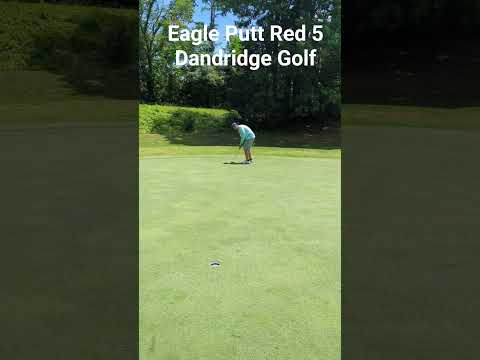
Eagle putt Red 1 Dandridge
Eagle Putt on Red 1 at Dandridge: How to Handle Golf’s Best Opportunity
There is no feeling in golf like standing over an eagle putt — and this video captures one on the 1st hole of Dandridge’s Red nine. After two great shots, you are putting for a 2 on a par 5 with the whole round in front of you. Here is how to give that putt its best chance without letting the moment get too big.
The key insight: an eagle putt is still just a putt. The hole did not get smaller because it is for eagle, and your stroke does not need to change. The players who convert these chances do one thing well — they keep their routine exactly the same as any other putt and focus on speed, not the outcome.
Reading an Eagle Putt for Pace
Most eagle putts are long, which makes speed the entire putt. Read the big slope first and forget the tiny wiggles — from 30 feet, getting the pace right matters ten times more than a perfect line. A great rule: try to die the ball within a three-foot circle past the hole, never racing it well by.
Give yourself permission to be aggressive on the read but smooth on the stroke. Pick your line, trust it, and roll it with the same tempo you use on every putt. And if it does not drop, that tap-in birdie is still a fantastic start.
Eagle putts are rare — enjoy them. Stay in your routine, roll it with confidence, and let the ball do the work.
⛳️ Want more raw, unfiltered golf? Browse the full Shankers Blog — every shot, every round, no fluff.

Birdie putt Red 1 Dandridge
Birdie Putt on Red 1: Starting Your Round at Dandridge
There’s no better feeling than a birdie look on the first hole — and the video above shows one on Red 1 at Dandridge Golf and Country Club. Opening holes set the tone, and starting with a scoring chance tells you everything about how the round could go.
But the first green of the day is also the hardest to read. You haven’t seen the greens roll yet, you don’t know the speed, and the nerves are fresh. That’s why a birdie putt on hole one is as much about information gathering as it is about scoring — it calibrates your speed for the whole round.
Reading an Unfamiliar First Green
On the first hole, trust your eyes over your expectations. Walk around the putt, look at it from both sides, and pay attention to the big picture — greens usually drain toward water or away from the high ground. At Dandridge, the Red course greens have subtle movement that rewards a careful look.
Speed is the priority putt number one. A first-hole birdie attempt that races six feet past turns a great start into a grinding par save. Play slightly less break than you think and focus on dying the ball at the hole — you can always make the comebacker, but you can’t un-ring the bell on a three-putt.
Watch the putt, note the speed, and carry that feel for the next seventeen holes. A birdie on Red 1 is a statement — and even a good lag is a lesson.
⛳️ Want more raw, unfiltered golf? Browse the full Shankers Blog — every shot, every round, no fluff.

Albatross shot Red 9 Dandridge
Albatross: Chasing Golf’s Rarest Shot at Dandridge’s Red 9
A hole-in-one on a par 4. A two on a par 5. The albatross — also called the double eagle — is the rarest score in golf, rarer than an ace by most estimates. The video above captures the moment one drops on Red 9 at Dandridge, and the disbelief is the best part. Nobody expects an albatross. That is what makes them magic.
Let us put the rarity in perspective. Studies of amateur golf suggest the odds of a hole-in-one run roughly 12,500 to 1 for an average player. An albatross? Estimates range from one to several million to one. Most golfers will never witness one, let alone make one.
How Eagle Chances Are Actually Created
You cannot plan an albatross, but you can plan for eagle — and the strategy is the same one that produced this one. It starts with positioning the second shot. On a reachable par 5, the goal is not the green; it is a number. Give yourself a full club into the green from a clean lie, ideally slightly below the hole, and now you are putting — or chipping — for eagle instead of scrambling for birdie.
The second ingredient is green-reading from the fairway. Before you hit that second shot, study the green like you are already putting: where is the backstop, where does it feed, where is the miss that still leaves an uphill chip? Albatrosses and eagles happen when the approach is played with the putt in mind.
Will you ever make one? Probably not — and that is fine. But every time you give yourself a real eagle look on a par 5, you are buying a lottery ticket with better odds than most. Red 9 just proved they pay out.
⛳️ Want more raw, unfiltered golf? Browse the full Shankers Blog — every shot, every round, no fluff.
Ready to finally understand golf improvement without the headache? GolfLic.com is your dedicated source for free and easy golf lessons designed to deliver real results, fast. Forget the confusing theories and endless explanations – just clear, actionable advice and videos to get you swinging better and enjoying the game more. Explore our free lessons now and unlock your golfing potential at GolfLic.com!