
Welcome to GolfLic.com, Golf Lessons In A Can.
We took real bits of golf lesson and canned them in a golfer safe formula that is fun, safe, and effective to use.

GolfLic Golf Lessons In a Can
Tired of endless, pointless chatter from social golf influencers? Want to improve your golf game without confusing jargon and endless talk? Does watching more golf videos actually make your swing worse? GolfLic’s canned golf lessons are sure to quench your thirst for golf knowledge. Crack open a GolfLic, and improve your game with GolfLic, Golf Lessons in a Can.
Most Watched Golf Videos
The most-watched golf videos from the Jobe Leonard YouTube channel, ranked by views.


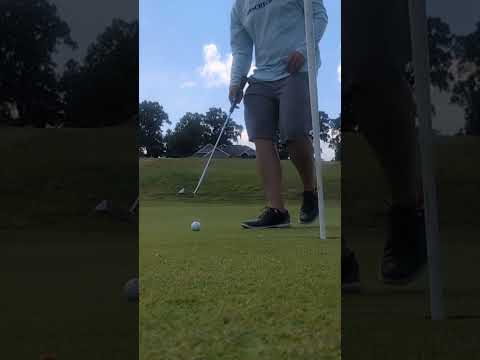



Blue 3 Dandridge golf eagle chip
Eagle Chip on Blue 3: The Shot That Makes the Round
Nothing electrifies a round like an eagle chip — one swing from off the green that turns a good hole into a legendary one. This video captures that moment on Blue 3 at Dandridge: the ball landing soft, checking up, and disappearing for eagle. It is the kind of shot you replay in your head for a week. Here is how to give yourself more chances at it.
Set Up the Eagle, Do Not Chase It
Eagle chips start two shots earlier. On a par 5 like Blue 3, the recipe is a good drive and a committed second shot that leaves a simple pitch — not a heroic one. The best eagle chances come from 20 to 40 yards with a clean lie and green to work with. If your second shot leaves a buried lie or a downhill slider, take your birdie and move on; forcing eagles is how you make bogeys.
The Chip Itself: Landing Spot First
Pick your landing spot before anything else — the exact patch of green where the ball should touch down. Then choose the club that gets it there with the right run-out: less loft when you have green to work with, more loft when you need it to stop. Keep the hands soft, accelerate through the ball, and watch the spot, not the hole. Great chippers stare at their landing spot; the hole takes care of itself.
You will not hole every eagle chip — nobody does — but the technique that holes them also leaves tap-in birdies when they do not drop. That is the real payoff.
⛳️ Want more raw, unfiltered golf? Browse the full Shankers Blog — every shot, every round, no fluff.

Blue 2 Dandridge golf Eagle chip
Eagle Chip on Blue 2: The Art of the Chip-In
Nothing electrifies a round like chipping in for eagle — and Blue 2 at Dandridge just delivered one. The video above shows the shot; here’s the technique behind holing those greenside miracles.
Pick Your Landing Spot First
Every great chip starts with a decision, not a swing. Find your landing spot — usually two to four paces onto the green — and focus everything on hitting it. The ball’s first bounce determines everything; after that, it’s just physics and green reading.
For an eagle chip, play the percentages: a lower, running shot with a pitching wedge or 9-iron is far more reliable than a high flop. Get it on the ground early and let it release to the hole.
The Stroke: Simple and Repeatable
Set up narrow, weight forward, hands slightly ahead. Then make a putting-like motion — shoulders rocking, wrists quiet. The biggest killer of chip-ins is the wristy flip that adds loft and kills control. Keep it simple, keep it smooth, and accelerate gently through the ball.
You won’t hole every eagle chip. But with a clear landing spot and a quiet stroke, you’ll scare the hole far more often — and every once in a while, the ball disappears.
Practice holing chips with a purpose: lay a towel on the practice green and try to land five balls on it in a row, then try to hole two of the next ten. Games like this bridge the gap between technique and performance — because chipping in for eagle starts with expecting the ball to go in.
⛳️ Want more raw, unfiltered golf? Browse the full Shankers Blog — every shot, every round, no fluff.

White 5 Albatross shot Dandridge Golf.
Albatross Alert on White 5: The Rarest Shot in Golf at Dandridge
A double eagle. An albatross. Three under par on a single hole — and the video above captures the shot that made it happen on White 5 at Dandridge. It is the rarest shot in golf, statistically harder than a hole-in-one, and it deserves a proper appreciation.
The odds tell the story: the average golfer is far more likely to ace a par three than to hole a second shot on a par five. An albatross requires the perfect storm — a booming tee shot, a flawless long approach, and a green that accepts it. When all three align, you get a story you will tell for the rest of your life.
Par-5 Strategy: When to Chase the Miracle
Most albatrosses start with a smart decision off the tee. To reach a par five in two, the drive has to be both long and in position — a 280-yard drive in the rough rarely sets up the hero shot. Favor accuracy with distance on reachable par fives; the fairway is the launchpad.
Then be honest about the second shot. Going for it makes sense when the trouble is manageable — a bunker you can escape, a run-off you can chip from. It does not make sense over water or out of bounds, where the downside is a snowman. The best albatross hunters are aggressive with their targets and disciplined with their danger.
White 5 gave up one of golf’s holy grails in this video. Study your own par fives the same way — and when the stars align, take dead aim and enjoy the walk to the green.
⛳️ Want more raw, unfiltered golf? Browse the full Shankers Blog — every shot, every round, no fluff.

Birdie putt Red 9 Dandridge Golf
Birdie Putt on Red 9 at Dandridge: Mastering the Downhill Slider
Not all birdie putts are created equal, and the one in this video — a slick downhill slider on the 9th at Dandridge’s Red nine — is the trickiest kind. Downhill putts with break punish the two mistakes amateurs make most: too much pace and too little break. Here is how to handle them.
The golden rule of downhill putting: the ball will break more than you think and roll farther than you expect. Gravity is doing half the work, so your job is finesse, not force. Play significantly more break than your eyes tell you — on a fast downhill putt, doubling your initial read is often closer to correct than your first instinct.
Pace Is Everything on the Downhillers
Think “die it at the hole.” A downhill birdie putt should be traveling at its slowest as it reaches the cup, using the last bit of energy to topple in. That dying pace also maximizes the effective size of the hole — a ball rolling slowly can catch the edge and drop, while a firm one lips out.
Practice this with the “ladder drill”: place tees at three, six, and nine feet on a sloping part of the practice green and putt balls trying to stop each one just past the previous tee. You will quickly calibrate the feather touch these putts demand.
Respect the downhill slider, play the extra break, and let gravity do the work. That is how you turn a scary birdie putt into a tap-in story.
⛳️ Want more raw, unfiltered golf? Browse the full Shankers Blog — every shot, every round, no fluff.

Birdie Putt Blue 7 Dandridge golf
Birdie Putt on Blue 7: Scoring on the Back Nine
The back nine is where rounds are won — and a birdie putt on Blue 7 at Dandridge Golf and Country Club is exactly the kind of chance that turns a good round into a great one. The video above captures that moment: late in the round, legs a little tired, but the putter still has work to do.
Back-nine birdie putts feel different because everything is amplified. You’re either protecting a score or chasing one, and both add pressure. The golfers who score late share one trait: their routine doesn’t change when the stakes go up. Same read, same practice strokes, same commitment.
Closing-Time Putting
Late in the round, trust your tired eyes less and your feet more. Walk the putt and feel the slope through your soles — fatigue makes visual reads less reliable, but your balance still tells the truth. On Dandridge’s Blue greens, the subtle late break is the putt-killer, so give it the respect it deserves.
Also: stay aggressive on your line. Tired golfers leave putts short — it’s the most common late-round miss. Remind yourself that the hole doesn’t move and the stroke doesn’t change. Finish your backswing, accelerate through, and let the ball do the work.
Watch the video — that’s a back-nine birdie chance earned the hard way. Convert a few of those and you’re not just playing golf, you’re scoring.
⛳️ Want more raw, unfiltered golf? Browse the full Shankers Blog — every shot, every round, no fluff.

Birdie Putt Blue 5 Dandridge Golf
Pace Makes the Putt: The Art of Speed on Blue 5’s Birdie Try
Ask a great putter what matters most and you will not hear about line. You will hear about pace. The birdie putt on Blue 5 at Dandridge in the video above is a masterclass in the concept: the line is only half the equation, and the half that matters less. Get the speed right and the hole plays bigger; get it wrong and even a perfect read misses.
Here is the physics. A putt rolling at the ideal pace — dying as it reaches the hole — effectively makes the cup wider, because the ball can drop from the edges. A putt hammered at the hole shrinks the cup to its physical size and punishes anything off-center. That is why the “never up, never in” crowd three-putts more than they admit: ramming putts costs you the comebackers that gentle pace guarantees.
Training Your Hands for Distance
Speed control lives in the length of the stroke, not the force of the hit. This is the single most important putting fundamental: for every distance, the backswing and follow-through stay in proportion, smooth and unhurried. Practice the ladder drill — balls at 10, 20, 30, and 40 feet, one putt each, trying to stop every ball within a putter-length past an imaginary hole. You will quickly feel how stroke length, not muscle, controls distance.
On breaking birdie putts like Blue 5’s, let pace dictate the read. Decide you are dying it at the hole, then play the fuller break that pace requires. Most amateurs do the reverse — pick a line, then jam it — and wonder why the ball stays stubbornly straight.
Master pace and the birdie putts start dropping. The hole is always the same size. Your speed decides how big it plays.
⛳️ Want more raw, unfiltered golf? Browse the full Shankers Blog — every shot, every round, no fluff.

Birdie putt Blue 1 Dandridge Golf
Birdie Putt on Blue 1: Earning the Chance
Every birdie putt you see on video — including this one on Blue 1 at Dandridge — was earned a shot earlier. Birdies are not made on the green; they are made with the approach that leaves a makeable putt. If you want more birdie putts, stop practicing putting and start practicing the shots that create them.
Greens in Regulation Are Birdie Tickets
The math is brutal and simple: tour players make birdie roughly 25% of the time after hitting the green in regulation, and almost never when they miss it. For amateurs the gap is even wider. So the fastest way to more birdie putts is more greens hit — which means smarter approach strategy. Aim at the center of the green, take enough club to get there, and stop firing at tucked pins.
Wedge Distance Control
Most birdie chances come from inside 120 yards, so own your wedge numbers. Know exactly how far each wedge flies with a full swing, a three-quarter swing, and a half swing — that is nine reliable distances that cover nearly every approach. On the range, practice to targets, not just into the distance. A 30-foot birdie putt from the middle of the green beats a 10-footer short-sided every time.
The putt gets the glory, but the approach does the work. Hit more greens, leave yourself uphill looks, and Blue 1 will start feeling like a birdie hole instead of a par hole.
⛳️ Want more raw, unfiltered golf? Browse the full Shankers Blog — every shot, every round, no fluff.

Birdie Putt White 6 Dandridge Golf
Birdie Putt on White 6: Owning the 10-to-15 Footer
The 10-to-15 foot birdie putt is golf’s ultimate opportunity zone — close enough to expect a make, long enough to demand a great stroke. The video above shows one on White 6 at Dandridge. Here’s how to convert more of them.
Commit Like It’s Six Feet
Most golfers get tentative from this range, guiding the putter instead of stroking it. Flip the script: treat every 12-footer like a must-make. Pick your line, trust it completely, and make an athletic, confident stroke. Tentative putts wobble; committed putts track.
Your pre-shot routine is your weapon here. Same steps every time — read, aim, practice stroke, go. Routine replaces hope with process, and process is what holes putts under pressure.
Green Reading at Mid-Range
From 10 to 15 feet, subtle breaks matter most. Check the last three feet of the putt most carefully — that’s where the ball is slowest and breaks most. And remember the grain: on Bermuda-style greens, putts break toward the direction the grass leans and run faster down-grain.
Statistically, tour pros make about one in three from this range. Beat one in four and you’re gaining strokes on the field. Give yourself the chance — then roll it like you mean it.
Consider learning a green-reading system like AimPoint to sharpen your reads from this range. Feeling slope with your feet removes the guesswork that eyes alone can’t solve. Even a basic understanding of slope percentages turns “it breaks a little left” into a precise, committable read.
⛳️ Want more raw, unfiltered golf? Browse the full Shankers Blog — every shot, every round, no fluff.

Birdie putt White 5 Dandridge Golf
Bounce-Back Birdie on White 5: Dandridge Scoring Strategy
Every scorecard has a hole where the round turns — and the birdie putt in the video above on White 5 at Dandridge has bounce-back written all over it. The bounce-back birdie, the one that follows a bogey or worse, is the most valuable putt in amateur golf.
Statistically, holes after a bogey are where big numbers breed. Frustration speeds up routines, loosens decision-making, and turns one bad hole into three. A birdie right after a mistake does not just save a shot — it resets the entire round emotionally.
How to Manufacture a Bounce-Back
Play White 5 — or any hole after a bad one — with boring, high-percentage golf. Fairway off the tee, middle of the green on the approach, lag the first putt close. Bounce-back birdies rarely come from heroics; they come from giving yourself a stress-free look and letting good fundamentals work.
Build a between-holes reset ritual. After a bad hole, do something physical and final — take the glove off, take a sip of water, look at the scenery for ten seconds. The ritual tells your brain the last hole is over. Golfers without one carry bogeys like luggage.
The putt in this video is proof of concept: shake off the last hole, execute the plan, and roll it in. Bounce-back birdies are not luck — they are a skill, and it is one you can practice every single round.
⛳️ Want more raw, unfiltered golf? Browse the full Shankers Blog — every shot, every round, no fluff.
Ready to finally understand golf improvement without the headache? GolfLic.com is your dedicated source for free and easy golf lessons designed to deliver real results, fast. Forget the confusing theories and endless explanations – just clear, actionable advice and videos to get you swinging better and enjoying the game more. Explore our free lessons now and unlock your golfing potential at GolfLic.com!